Who I am
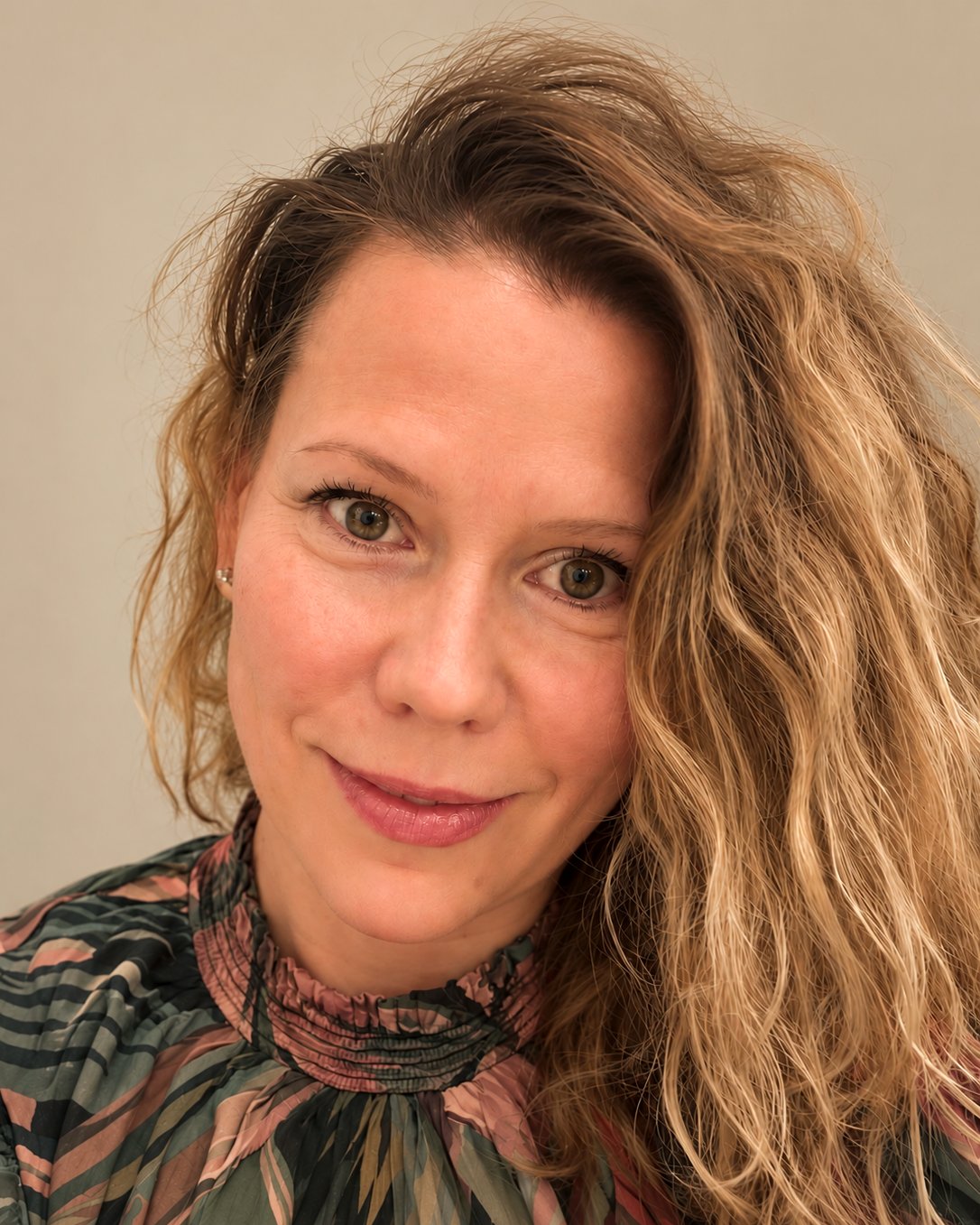
Olesya Van Dijck, MA, LPC, ATR-P
Licensed Professional Counselor · Washington, DC and Virginia · English and Russian
Also listed on Psychology Today · LinkedIn
I was a dancer before I became a therapist.
Years before I had language for attachment, regulation, or repair, I had rhythm, music, and the constant wordless calibration between myself and another person. What I would later learn to call attunement, I first learned through movement.
Two bodies in contact are never only leading or only following. Each is doing both, often in the same instant. Weight travels between them through tension and compression: one pulls away and is still held; one presses in and is met. Both are contact. The shape that appears between them belongs to neither person alone.
Couples do this too. They simply do not call it that, and they are rarely watching.So I watch. Much of what I notice is not only what is being said, but what moves underneath it — the breath that stops, the shoulders that square, the half-turn away that arrives a second before the sentence it belongs to. A nervous system deciding, faster than thought, whether this is a moment for contact or protection. These responses cannot simply be argued away. They can be slowed down, noticed, experienced differently and, over time, changed.
I am not watching from outside it. A good deal of what makes this possible is simply another nervous system in the room that is not alarmed — something to borrow from until yours steadies.
Image came to me much the same way movement did — before the theory rather than after. It is why there is paper in my offices. Sometimes an image, a gesture, or the placement of two objects reveals something a carefully constructed sentence has been circling for twenty minutes.
The road here was not a straight one. Before psychotherapy I worked in law and international project management — the Olympics, the Parliamentary Assembly of the Council of Europe, human rights work. I know something of the world many of my clients inhabit: its speed, the competence it rewards, the composure it demands, and what it can quietly cost to become the person who does not flinch.
I have also started over in six countries. Each meant a new language, new customs, and new signals for belonging. Again and again I had to build relational bridges with people whose signals I could not yet read.
The lesson arrived in a different accent each time.
Connection is not a temperament you are issued. It is a practice. And practice can be resumed.George Washington University · Art Therapy & Mental Health Counseling
Licensed Professional Counselor · Washington, DC and Virginia
Nearly a decade across acute psychiatric care, community mental health, a research university clinic, and private practice
English and Russian
Relational models — Emotionally Focused Couples Therapy (EFT) · Imago Relationship Therapy and Relational Dialogue
Action methods — Psychodramatic Approaches to Relational Therapy · Psychodramatic Bodywork
Body and image — Polyvagal-Informed Somatic Psychotherapy (Applied Polyvagal Theory) · Expressive Therapy Approaches
Begin with a conversation.
A free fifteen-minute consultation, by phone or video. You describe what brings you; I tell you honestly whether this is the right fit and what the work would look like. If I am not the right person for what you are carrying, I will gladly help you find someone who is. There is nothing to prepare.
Reaching out is the hard part. It is reasonable that it feels that way.
Request an appointmentWashington, DC 20036
Alexandria, VA 22314