The approach
You are very good at this.
Couples therapy in Washington, DC and Alexandria, Virginia.Whatever this is — the case, the model, the round, the diagnosis — you built a career on being the one who stays composed as the stakes rise, who finds the flaw in the argument, who carries the load without needing help to carry it.
Then you close the laptop.
And somewhere between the office and the dinner table, the same competence begins working against you. Composure lands as distance. Solving lands as dismissal. Self-reliance — the thing that has never once failed you at work — reaches the person across from you as I don't need you, and I won't let you see me struggle.
You may already know this. You may have read the books, taken the assessments, listened to the podcasts on the commute. You can name the pattern precisely and say where it came from. And then a small disagreement happens on a Thursday night, and you spend three days behind a wall you did not decide to build.
Composure is not calm. Underneath it the system has been running hard for hours — and when it finally stops running, it does not relax. It goes quiet, and somewhere far from the room.
Knowing why you close has not taught you how to stay open.That is not a failure of intelligence. It is the distance between insight and experience — and one does not become the other on its own.
The idea
Relationships are living systems, and living systems move.
An attachment-based, relational view of how patterns form — and how they change.We are born, traumatized, healed and transformed in relationship.
No one becomes a person alone. We are formed in relationship — in the first face that answered ours, in who came when we cried and who did not. Everything any of us knows about closeness was learned somewhere, from someone, long before we could consent to the lesson.
Much of what injures us is relational too. Not only the obvious violences, but the parent who could not bear your feeling, the love that arrived on conditions, the years of being managed rather than met. Harm that happens between people gets stored as a rule about people: do not need, do not show, do not depend.
A rule laid down in relationship is not undone by insight. It is undone by a different experience of being with someone.Which is why the work is relational as well. Relationships approach and withdraw. They rupture and repair. They protect and become vulnerable. They contract, expand, reach, retreat, and return. They repeat what is familiar — and sometimes discover something else entirely.
What brings most people here is not the absence of movement but its narrowing: the same argument in the same shape, the same distance arriving at the same hour, a pattern that once protected something real and now only repeats.
Relational Motion names both things at once — the movement already alive inside every relationship, and the work of helping it resume where it has gone rigid, repetitive, or still.
Healing begins when a relationship begins to flow again.
Motion here means more than movement of the body. It is:
- emotional movement
- somatic and bodily movement
- movement toward and away from another person
- the shift between protection and vulnerability
- movement from repetition toward possibility
- movement between inner life and shared life
- creative and expressive movement
- developmental change over time
The space between two people is where patterns form. It is also where they can change.
How we work
Patterns don't stay abstract in this room.
Trauma-informed, experiential couples therapy: EFT, Imago Relationship Therapy and Relational Dialogue, Psychodrama and polyvagal-informed somatic work.They become visible, and then they become experiential.
In practice that means we work with the pattern as it happens between us, not only as it is reported afterward. We slow it down. We attend to what the body is already doing — the held breath, the turn away, the shift that arrives a moment before the words do. Sometimes we speak. Sometimes we draw, move, or take up positions in the room until the shape of the thing can be seen rather than argued.
Much of the early work is simply finding out what it takes for each of you to feel safe enough. Not safe — that is a great deal to ask of a room where the difficult things get said. Safe enough. Safe enough for a nervous system to stop scanning and turn toward the other person. Safe enough to be curious rather than judgmental about what your partner means. Safe enough for lightness and play to reappear in the space between you — which is not a break from the work, but one of the clearest signs that something has changed.
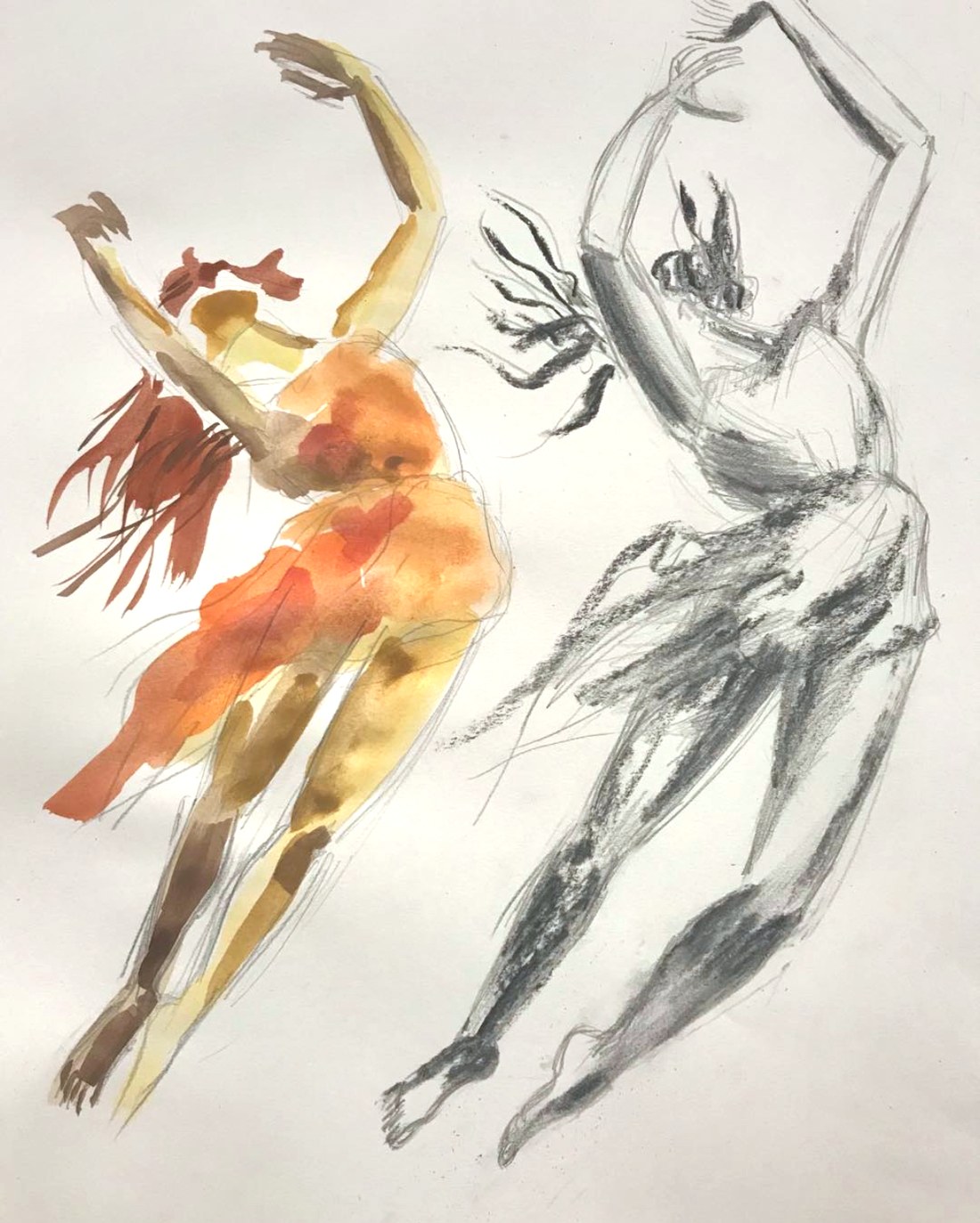
Some of this will feel unfamiliar. That is not incidental — it is the mechanism. Talking about a pattern uses the part of you that is already exceptionally good at talking about patterns. Experiencing one differently asks for something else.
We work at the edge of what you can stay present for, not past it. If something becomes too much, we slow down or pause — and slowing down is not a retreat from the work. It is frequently where the work happens. Your hesitation is information, not resistance.
I will not be neutral about what I see. If something one of you is doing is costing you the closeness you came for, I will say so — gently, and to both of you.
If you are looking for conversation alone, I am likely not the right fit. If you are tired of conversation alone, we should talk.Fees for every format are on one page, stated plainly.
Begin with a conversation.
A free fifteen-minute consultation, by phone or video. You describe what brings you; I tell you honestly whether this is the right fit and what the work would look like. If I am not the right person for what you are carrying, I will gladly help you find someone who is. There is nothing to prepare.
Reaching out is the hard part. It is reasonable that it feels that way.
Request an appointmentWashington, DC 20036
Alexandria, VA 22314